
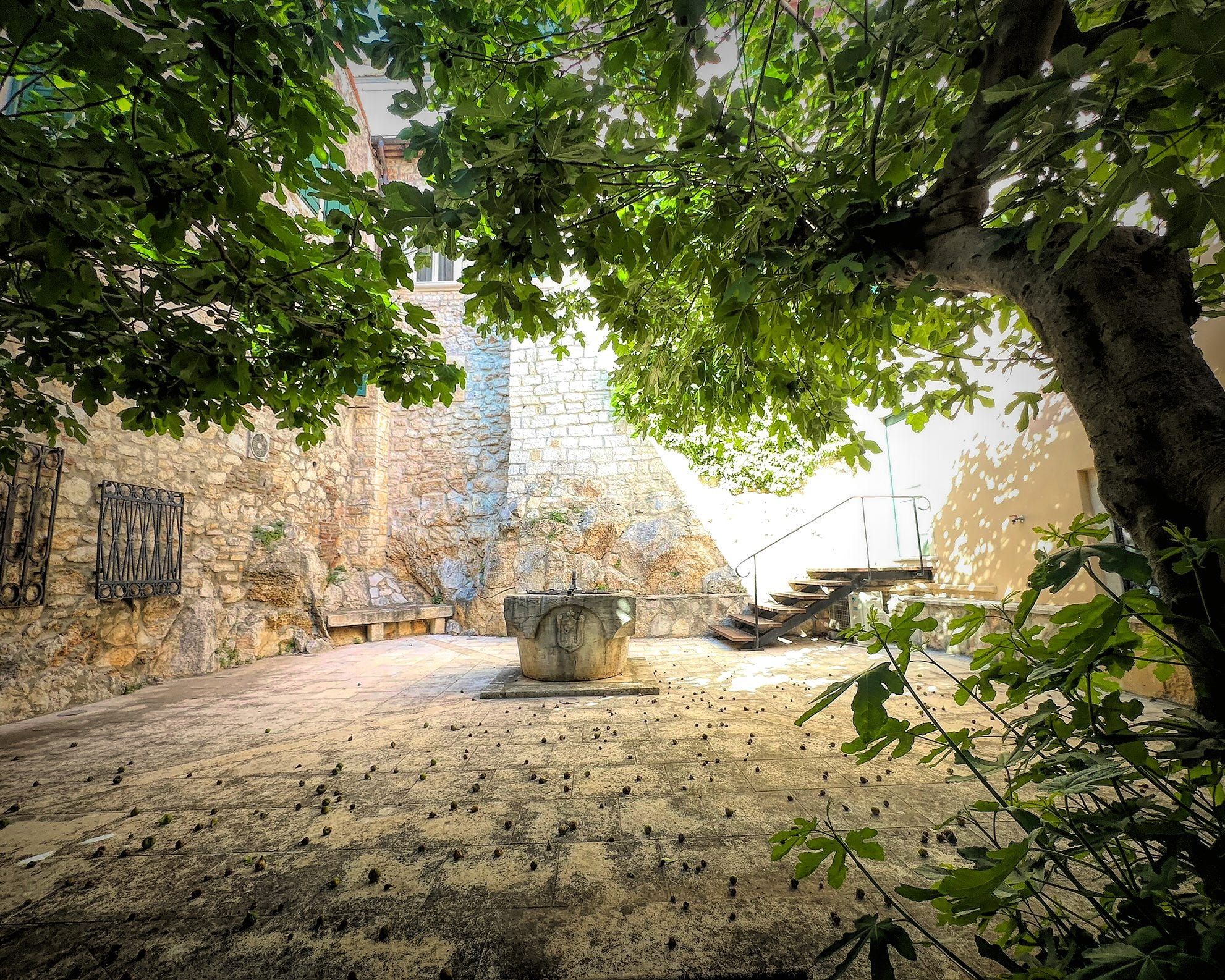
I love capturing photos of neighborhood homes and quiet streets when I travel abroad. This image of a secluded courtyard with a stone cistern wellhead was taken in Rovinj, a coastal gem on Croatia’s Istrian peninsula. For me, taking the picture is only half the story. I often spend hours experimenting with editing tools to bring the scene back to life, tweaking the details until the image feels complete and tells its full story.
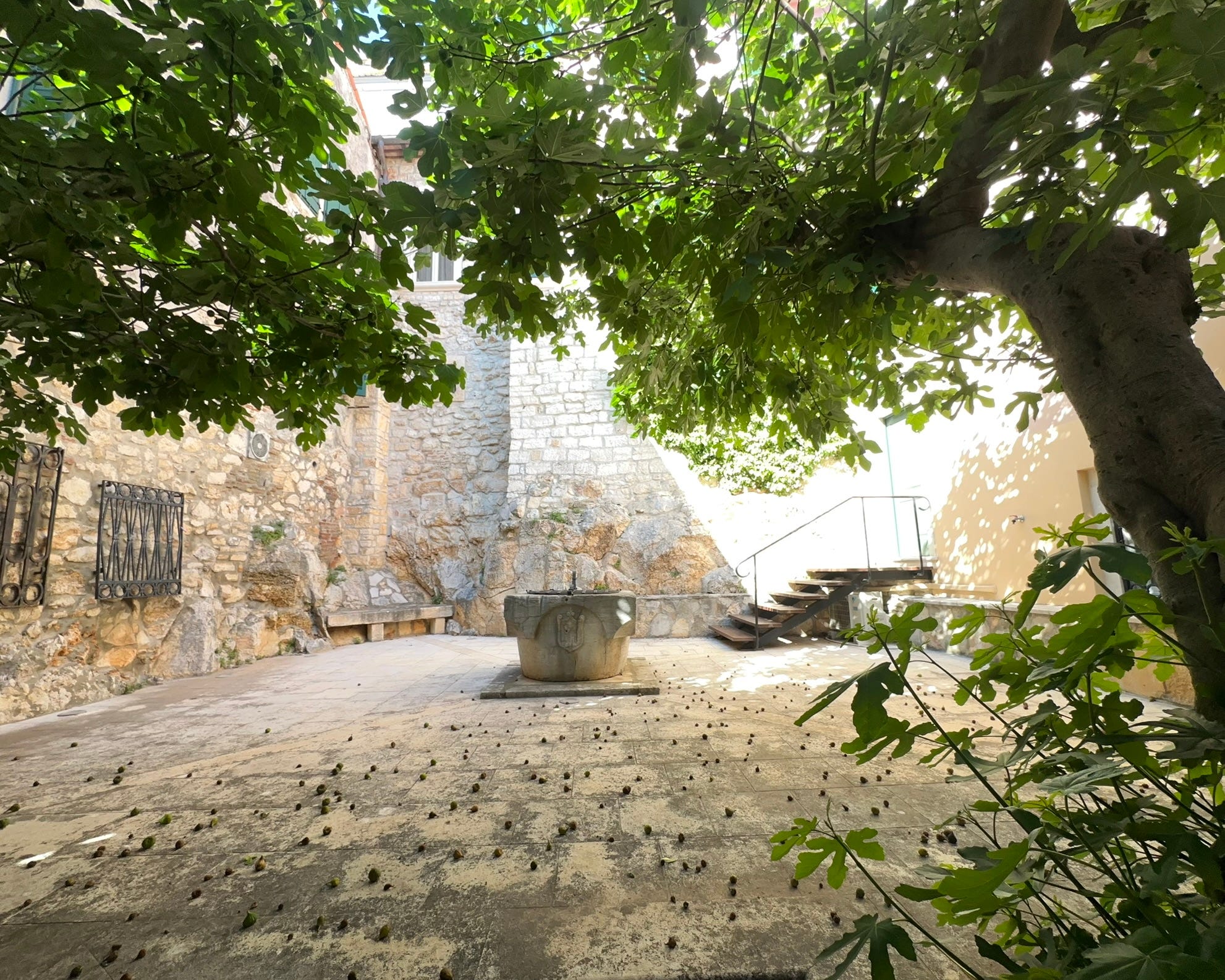
After finishing the edit, I became curious about the history hidden within the frame. What more could I learn about this courtyard that initially caught my eye? I uploaded the photo to Gemini AI alongside its location data and asked about its age. That simple question unlocked a fascinating local history.
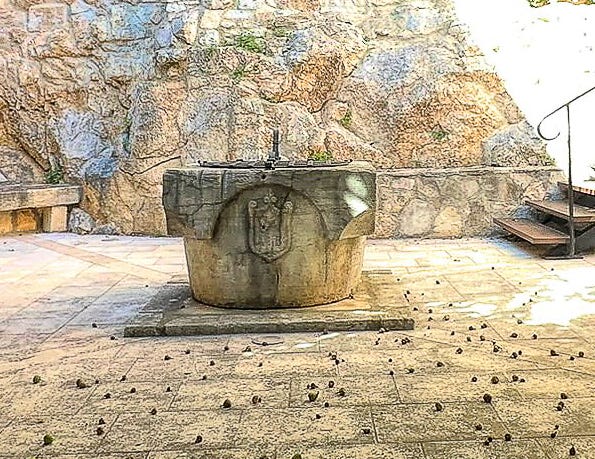
I learned that the Venetian-style cistern wellhead was the key historical anchor. During the Venetian Republic’s rule between the 15th and 18th centuries, residents of Rovinj relied heavily on underground cisterns that collected filtered rainwater from roofs and paved courtyards. The crest carved into the stone likely belonged to the noble family who built the home or marked the insignia of the local district.
Enclosed stone courtyards like this served as communal or private domestic hubs where water collection, outdoor cooking, and shade (traditionally from fig or grapevine canopies) provided relief from the summer heat.
I learned that during medieval and Renaissance construction in Rovinj they often adapted the housing directly onto of the natural contours of the limestone bedrock. Look the back wall and you can see where the modern-day masonry is built directly atop the limestone bedrock.
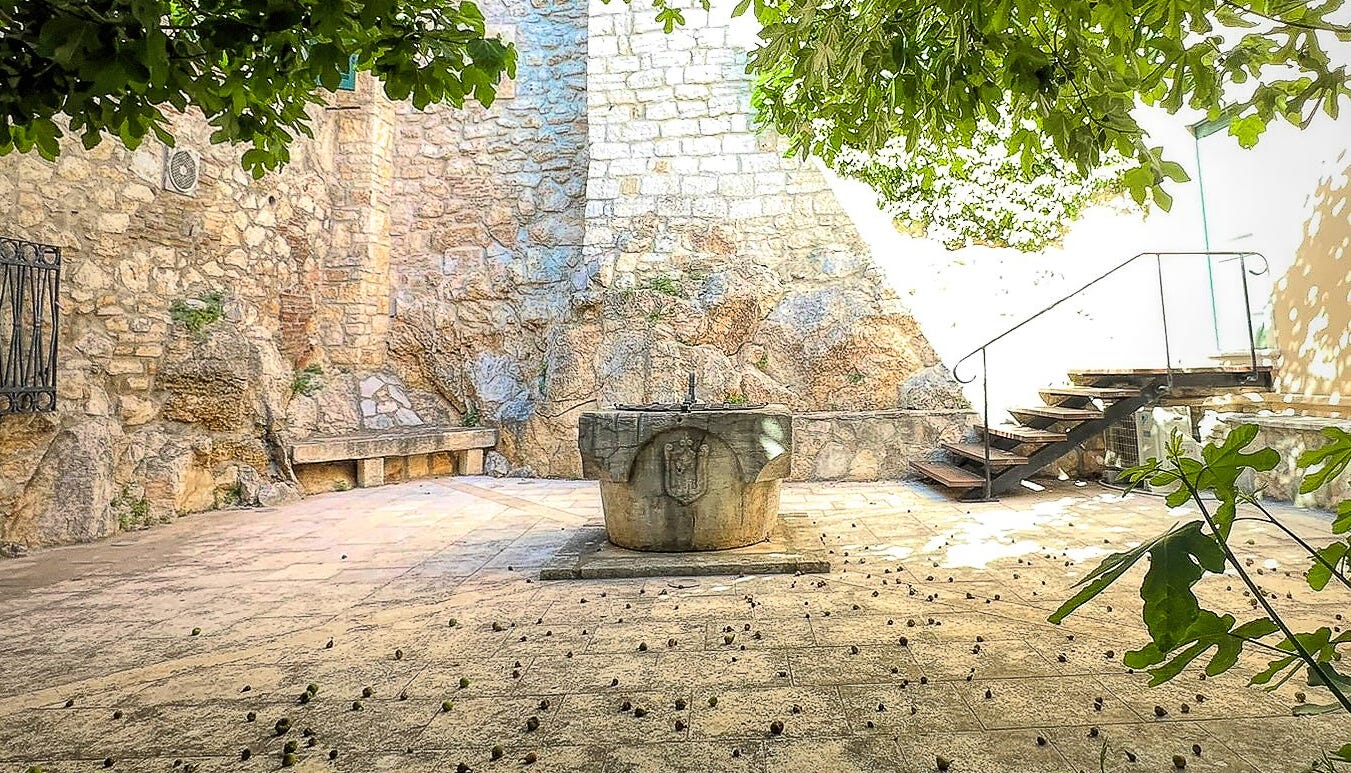
It is apparent that the present-day owners have respectfully blended the old and the modern. The wellhead, surrounding limestone walls, and foundation are likely several hundred years old and the flagstone paving shows decades of natural weathering and patina under the fig tree. I love the modern wooden-and-metal staircase on the right as it blends perfectly with the old of the courtyard. So much to see and learn from just one photo!
Let’s look into another photo I took early in the same day in the city of Pula, Croatia. This is a photo of the Pula Arena one of the best-preserved Roman amphitheaters in the world. The arena sits directly on the edge of Pula’s modern harbor and city streets.
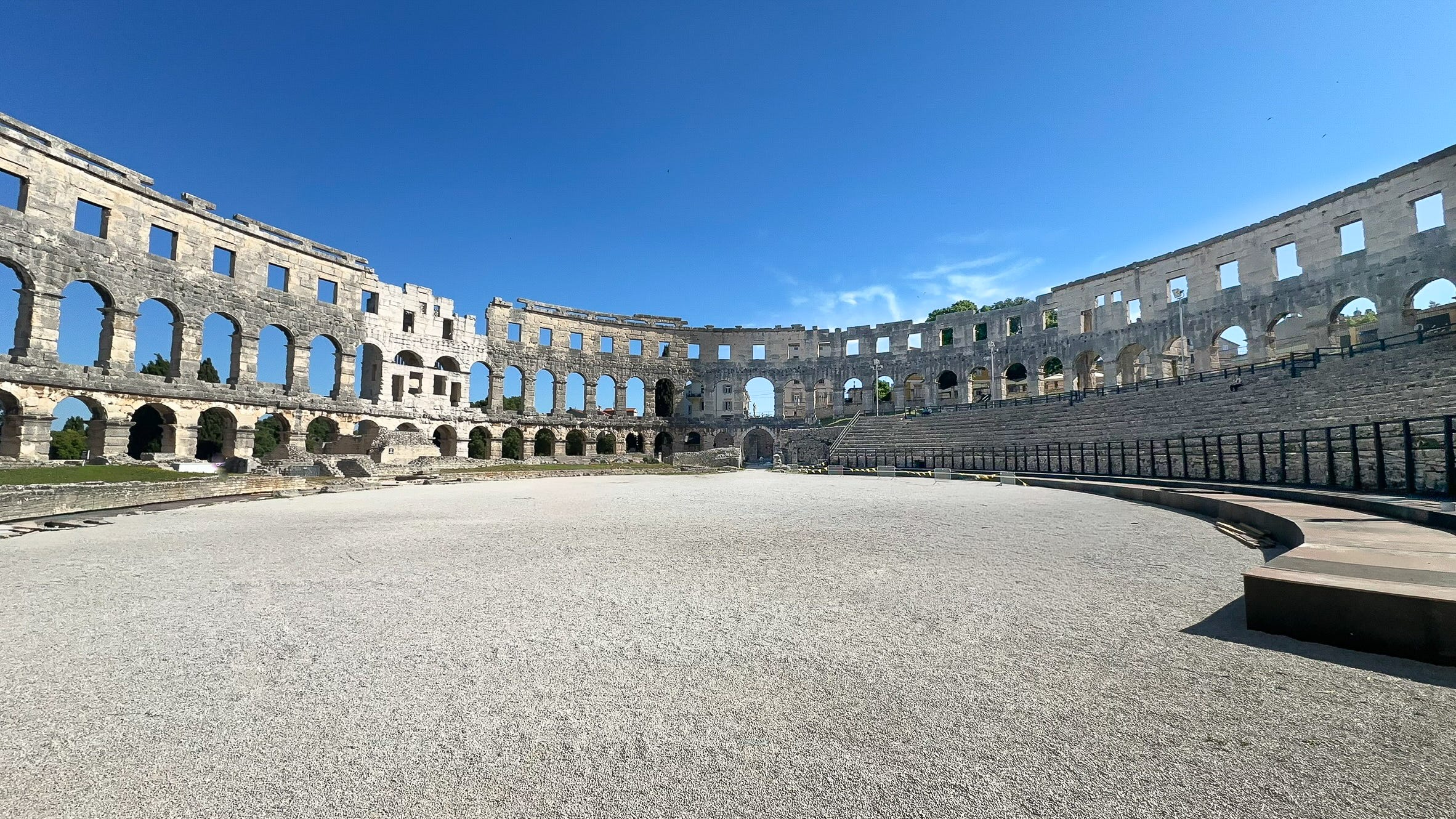
Built between 27 BC and 68 AD, it was completed during the reign of Emperor Vespasian, who also began Rome’s Colosseum and it was constructed entirely from local Istrian limestone.
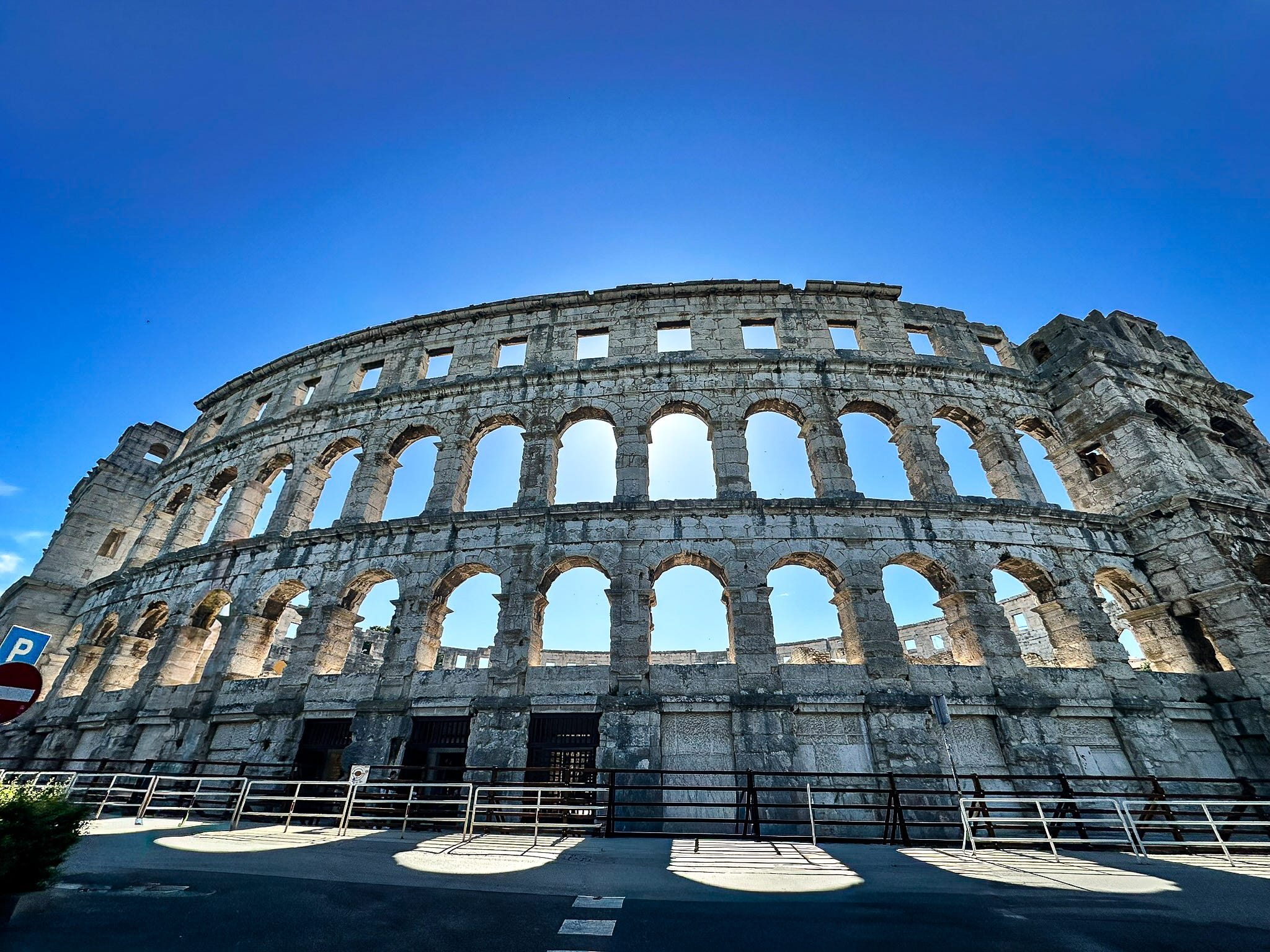
It stands out as the only surviving Roman amphitheater to retain all four side towers and its entire three-story exterior wall intact. In antiquity, it could pack in over 20,000 spectators for gladiatorial combat and wild animal hunts.
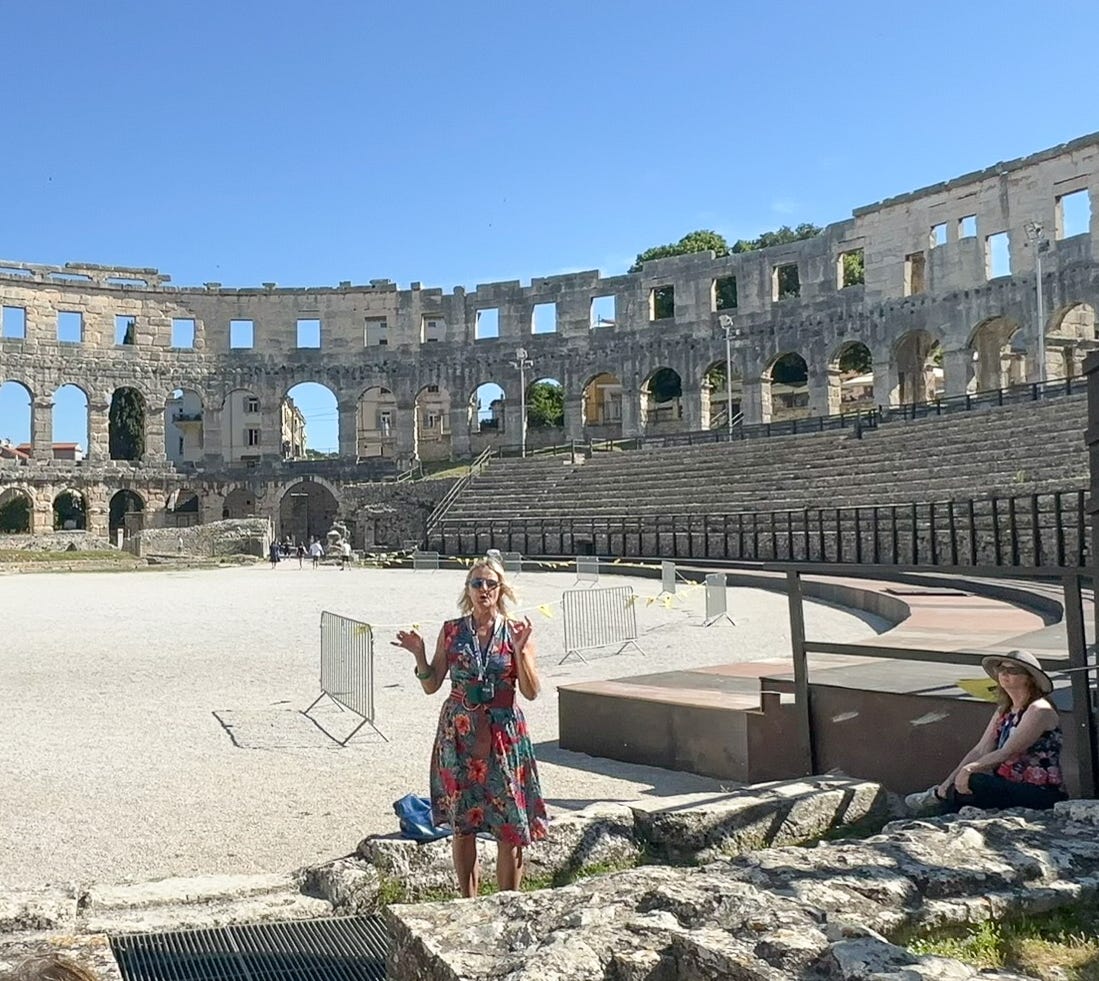
We learned from our Rick Steve’s guide, that what makes the Arena remarkable today is that it never became a static, fenced-off relic; it functions as a living bridge between the ancient past and modern civic life. It is a modern cultural stage today with concerts, film festivals and operas held here every year. We discovered that Sting was coming this summer for a concert in the Pula arena and it would hold 5,000 people. Can you imagine sitting in this area in on a summer evening listening to Sting?
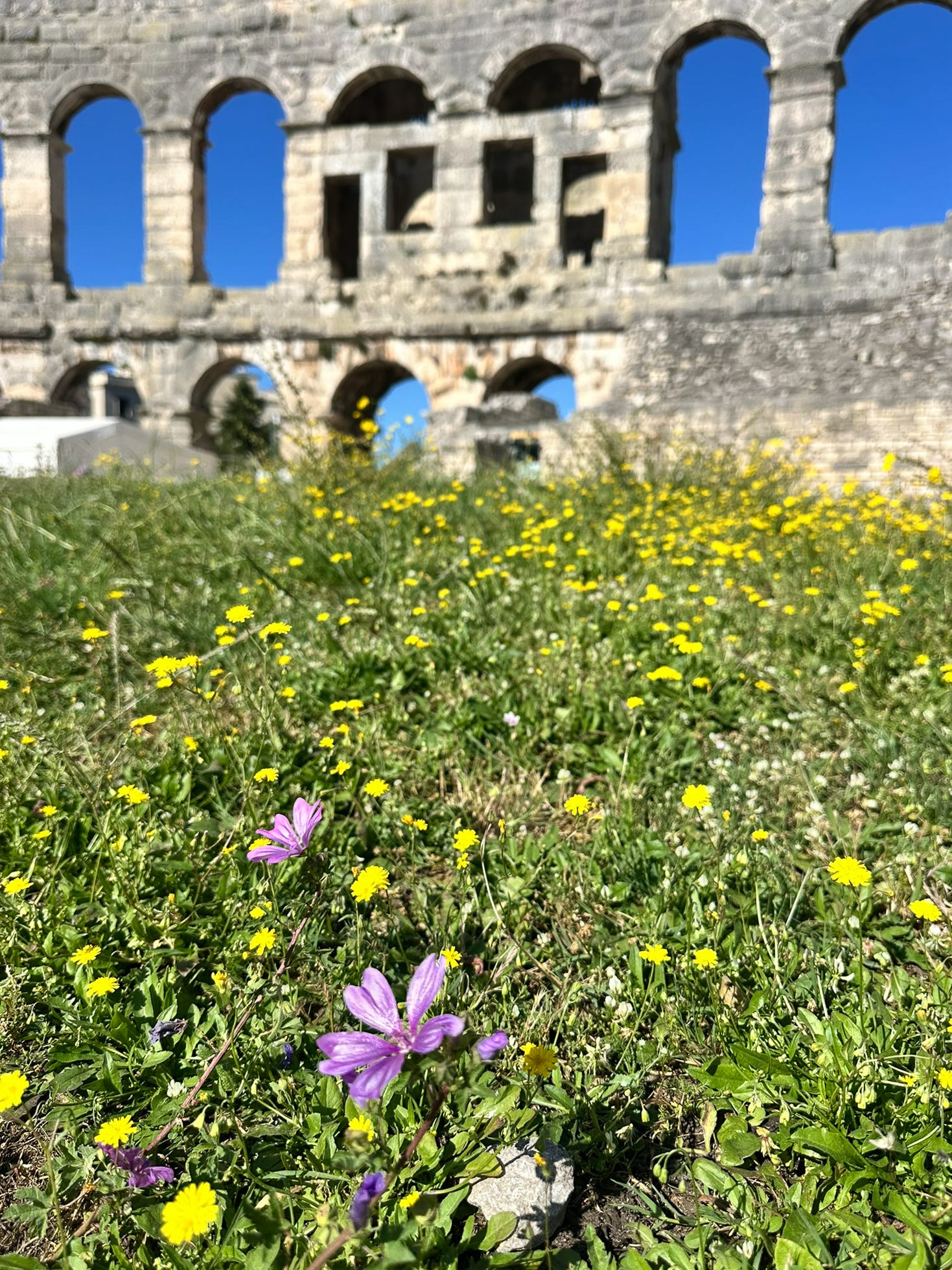
This Arena has one of the finest standing Roman outer facades in the world, its interior has been shaped over the centuries by continuous reuse since the fall of the Roman empire. It is truly a beautiful blend of the ancient and the modern. It is not an untouched archaeological freeze-frame which makes it very special in my mind.
Blending something old and new!
On the path together,
John